Crawl space moisture in North Carolina: the complete guide
Almost every crawl space problem, from the musty smell to the sagging floor, traces back to moisture. Here is where it comes from in a Triangle house, how to measure it and how each fix works.
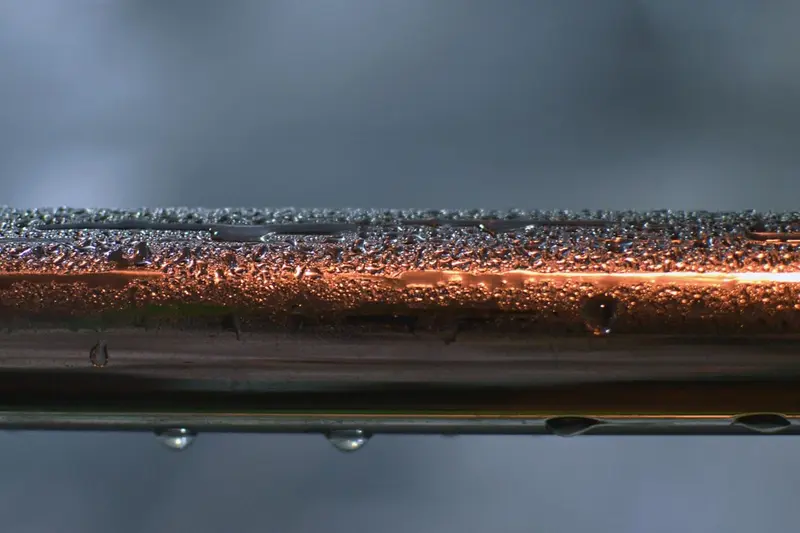
The three sources of crawl space moisture
Moisture gets into a crawl space in three forms, and each needs its own fix:
- From the ground. Bare soil gives off water vapor constantly, even when it looks dry. A crawl space without an intact ground cover is sitting over an endless supply of moisture.
- From the air. In a vented crawl space, outdoor air flows in through the foundation vents. In a Triangle summer, that air carries a lot of water.
- As liquid water. Rain running toward the house, groundwater rising through clay, plumbing leaks and condensate lines put liquid water directly into the space.
Most damp crawl spaces have more than one of these at work, which is why a single fix rarely solves the problem on its own.
Humidity, dew point and why summer is the wettest season
Relative humidity is the amount of water vapor in the air compared with the most it could hold at that temperature. Cool air holds less than warm air, so when the same air is cooled, its relative humidity rises. The temperature at which it reaches 100 percent and water starts to condense is the dew point.
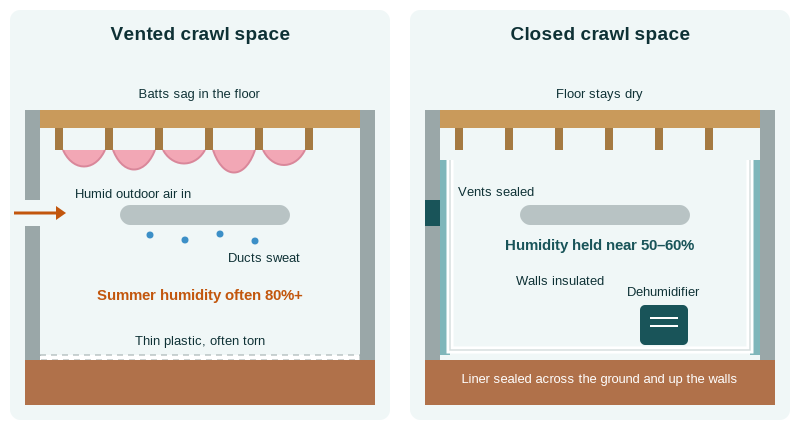
Summer dew points in the Triangle often sit around 70 degrees. A crawl space, shaded and in contact with the ground, is usually several degrees cooler than the outdoors in summer. As outdoor air flows in through the vents and cools, its relative humidity climbs, often into the 80s or 90s, and on the coldest surfaces it condenses. Air conditioning ducts carrying air in the 50s are colder still. That is why vented crawl spaces here are typically wettest in July and August, a finding confirmed by field research on North Carolina houses, and why the problem gets worse, not better, when people open the vents wider in summer.
Wood moisture: the number that matters
The framing is what moisture damages, so wood moisture content is the most important reading. Wood absorbs or releases water until it matches the humidity around it. Standard wood tables put lumber held at about 60 percent relative humidity near 11 percent moisture content, at 80 percent near 16 percent, and at 90 percent around 20 percent.
| Wood moisture | What it means |
|---|---|
| Below 15% | Healthy framing |
| 15–19% | Elevated; watch it |
| About 20% and up | Mold grows readily on the surface |
| About 28–30% and up, sustained | Decay fungi can start rot |
Keeping crawl space humidity below about 60 percent keeps the framing comfortably in the healthy range.
How to check your own crawl space
You can learn a lot without special training:
- Leave a digital hygrometer in the crawl space for a few weeks in summer and note the highs.
- Look for condensation on ducts and pipes, damp or fallen insulation, mold on the joists and water on the plastic.
- Open the access door and notice the smell: musty means growth.
- Walk the outside of the house after a heavy rain and watch where the downspouts and runoff go.
A crawl space inspection adds wood moisture readings, photos of every finding and a written plan.
Step 1: fix liquid water first
Nothing else works while water is getting in. Outside, that means clean gutters, downspouts extended away from the foundation and soil graded to slope away from the house, the cheapest fixes on the list. Plumbing and condensate leaks get repaired. Where water still enters, typically on low lots and in slow-draining clay, crawl space waterproofing adds an interior perimeter drain, and sump pump installation gives the water a way out.
Step 2: seal and dry the space
Once liquid water is under control, the space is closed off from the ground and the outdoor air:
- A vapor barrier covers the soil. On its own, it handles the ground but not the air.
- Crawl space encapsulation goes further: a heavy liner on the ground and walls, sealed seams and piers, and the vents and access door sealed.
- A crawl space dehumidifier, or conditioned air from the HVAC system, removes the moisture that remains and holds humidity near 50 to 55 percent.
The encapsulation vs. vapor barrier guide compares the two approaches, the vented vs. closed guide covers the North Carolina code, and the dehumidifier sizing guide explains how big the machine needs to be.
Step 3: repair what moisture damaged
With the space dry, the damage can be repaired without coming back:
- Crawl space mold removal cleans growth off the joists and subfloor.
- A crawl space cleanout removes wet insulation, torn plastic and debris.
- Crawl space insulation goes back in the right place: the floor for vented spaces, the walls and rim joist for closed ones.
- Floor joist repair sisters weakened joists, adds support posts and replaces rotted sill plates.
The encapsulation cost guide explains how these pieces add up.
Problems moisture causes
Each of these has its own page explaining the cause and the fix:
- Musty smell in the house, from mold and mildew under the floor
- Water in the crawl space after storms
- High crawl space humidity readings
- Sagging or bouncy floors
- Sweating ductwork dripping in summer
- Falling insulation hanging from the joists
- Wood rot in sill plates and joists
- Camel crickets and pests
- Cold floors in winter
Moisture in new and older Triangle houses
Older houses in Raleigh, Durham and the original parts of Cary often have low crawl spaces on brick piers, dirt floors with little or no plastic and decades of moisture history in the framing. Houses built from the 1970s through the 2000s typically have block foundations with vents, thin plastic and fiberglass batts, and by now the plastic is torn and the batts are falling. Newer houses in Apex, Holly Springs and west Cary are a mix: some builders now close crawl spaces from the start, while many still build vented ones with builder-grade plastic, and settling soil around a new foundation can direct water toward it in the first few years.
Whatever the age of the house, the order of the fix is the same: water first, then sealing and drying, then repairs. If you are buying, the guide to buying a house with a crawl space explains how to read what the inspector found.
Crawl space moisture guide — common questions
What is the main cause of crawl space moisture in North Carolina?
In vented crawl spaces, humid outdoor air in summer is a bigger source than most people expect, alongside rainwater from gutters and grading and moisture rising from bare soil.
How do I know if my crawl space has a moisture problem?
Measure it. Humidity consistently above about 60 percent, wood moisture readings near 20 percent, condensation on ducts or standing water all point to a problem.
What is the best way to keep a crawl space dry?
Stop liquid water first with gutters, grading and drainage, then seal the space from outside air and the ground, and remove the remaining moisture with a dehumidifier or conditioned air.
Do new houses have crawl space moisture problems?
They can. Many are still built with vents and thin plastic, and the soil around a new foundation settles and can direct water toward it in the first few years.
More crawl space guides
Want someone to look under your house?
Call and describe what you are seeing or smelling, or send the details and we will follow up.