Crawl space insulation in Cary, NC
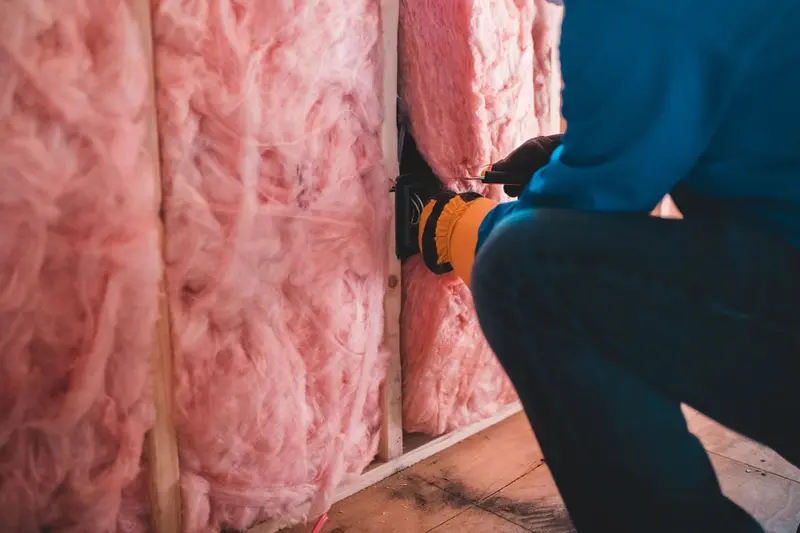
Fiberglass batts that are wet, sagging or on the ground removed, and the crawl space insulated the right way for how it is built: in the floor for vented spaces, on the walls and rim for closed ones.
- Wet, moldy or fallen batts removed and hauled away
- Rim joists sealed and insulated
- Foundation walls insulated in closed crawl spaces
- Floor insulation reinstalled correctly in vented ones
- Termite inspection gap left at the top of walls
Covering Cary · Apex · Holly Springs · Morrisville · Raleigh
Book crawl space insulation
Readings, not guesses
Inspections record humidity and wood moisture readings, with photos of what is under the house, so you can see the problem yourself.
The cause fixed first
Water and humid air are stopped before anything is sealed, so a new liner never hides a problem that keeps going.
A written, itemized price
Every part of the job is listed and priced in writing before work starts, so you can choose what to do now and what can wait.
Why choose us
A dry crawl space and a healthier house above it
Air from the crawl space rises into the rooms above it. Keeping that space dry protects the framing, the ductwork and the air you breathe.
- Moisture and wood readings
- Photos of every finding
- Written, itemized quotes
- Closed crawl spaces built to code
- Closing and inspection deadlines
- Local to Cary
What happens to fiberglass in a humid crawl space
Most Triangle houses with vented crawl spaces were insulated with fiberglass batts pushed up between the floor joists and held with wire supports, or sometimes nothing at all. Fiberglass insulates by trapping air, and in a humid crawl space that air carries moisture. In summer the underside of an air-conditioned floor is cool, and moisture in the batt condenses near the subfloor. The batt gets heavier, the supports bend, and sections drop onto the ground.
By the time a house is twenty years old, it is common to find a third or more of the floor insulation hanging or lying on the plastic. Wet batts also hold mold against the subfloor, and rodents nest in them.
Floor insulation vs. wall insulation
Where the insulation belongs depends on whether the crawl space is vented or closed.
- Vented crawl space. The crawl space is effectively outdoors, so the insulation goes in the floor above it, separating the heated house from the vented space.
- Closed crawl space. The crawl space becomes part of the house, so the insulation moves to the perimeter: the foundation walls and the rim joist. The floor batts are no longer needed and are usually removed, which also gets rid of a place for moisture and mold to hide.
Mixing the two, with insulation in both places in a vented crawl space or floor batts left in a closed one, rarely performs well.
Insulating the rim joist
The rim joist, the band of framing that sits on top of the foundation wall and closes off the ends of the floor joists, is one of the leakiest parts of a house. Air moves through gaps around it and along the sill plate, and a bare rim joist loses heat quickly. In both vented and closed crawl spaces, sealing and insulating the rim pays off. Closed-cell spray foam does both jobs in one step. Rigid foam board cut to fit each bay and sealed around its edges is the other common method.
Wall insulation in closed crawl spaces
In a closed crawl space, foundation walls are insulated with rigid foam board or closed-cell spray foam, often behind or as part of the wall liner. Foam insulation has to meet fire-safety requirements for crawl spaces, either through products approved for exposed use or a covering that protects it. North Carolina also has many termites, and its code calls for an inspection gap at the top of insulated foundation walls, a strip left bare so termite mud tubes stay visible during annual inspections.
Getting floor insulation right in a vented crawl space
If the crawl space is staying vented, the floor insulation has to be installed so it stays put:
- Batts fill the full depth between joists with no gaps, compression or missing pieces.
- Kraft-faced batts go with the paper up, against the subfloor.
- Supports are spaced closely enough, often every 18 to 24 inches, to hold the batts in contact with the subfloor.
- Ducts and pipes in the crawl space are insulated separately.
New insulation in a crawl space that is still wet will fail the same way the old did, which is why humidity and water problems are fixed first.
Removing the old insulation first
Old batts are bagged inside the crawl space and carried out, so nothing is dragged through the house. Removing them often reveals mold on the subfloor, droppings and nests, which are cleaned up before anything new goes in. See crawl space cleanout. In most cases the best long-term answer is to close the space with crawl space encapsulation, seal the vents and access door, and insulate the walls and rim instead of the floor.
Crawl space insulation — common questions
Why is the insulation falling down in my crawl space?
Fiberglass batts take on moisture from humid air, get heavy and sag out of the joists, especially when they were held up with too few supports. Once down, they do little and can hold mold.
Should a crawl space be insulated in the floor or the walls?
It depends on the design. A vented crawl space is outside the house, so the floor above it is insulated. A closed crawl space is part of the house, so the walls and rim joist are insulated instead.
Which way does the paper face on crawl space insulation?
In a vented crawl space, kraft-faced batts go with the paper up against the subfloor, toward the heated side. Facing it down toward the crawl space can trap moisture in the batt.
What is a termite inspection gap?
A strip left uncovered at the top of insulated foundation walls so termite tubes can be seen during inspections. North Carolina's code calls for one where foam insulation covers crawl space walls.
Is spray foam good for crawl spaces?
Closed-cell spray foam works well on rim joists and some walls, because it air-seals and insulates in one step. It needs a proper ignition barrier where the code requires one, and it must leave the termite inspection gap.
Problems this fixes
Often booked with this