Wood rot in the crawl space
Rot is what happens when wood stays wet long enough for decay fungi to break it down. In a crawl space it usually starts where water collects: the sill plate, the rim joist and the ends of joists.
What you may notice
- Wood that is soft when probed with a screwdriver
- Dark staining, cracking into small cubes or crumbling
- Moisture readings well above 20 percent
- Soft spots in the floor above
- Termite mud tubes on piers or walls
Book a crawl space inspection
Readings, not guesses
Inspections record humidity and wood moisture readings, with photos of what is under the house, so you can see the problem yourself.
The cause fixed first
Water and humid air are stopped before anything is sealed, so a new liner never hides a problem that keeps going.
A written, itemized price
Every part of the job is listed and priced in writing before work starts, so you can choose what to do now and what can wait.
How wood rot starts
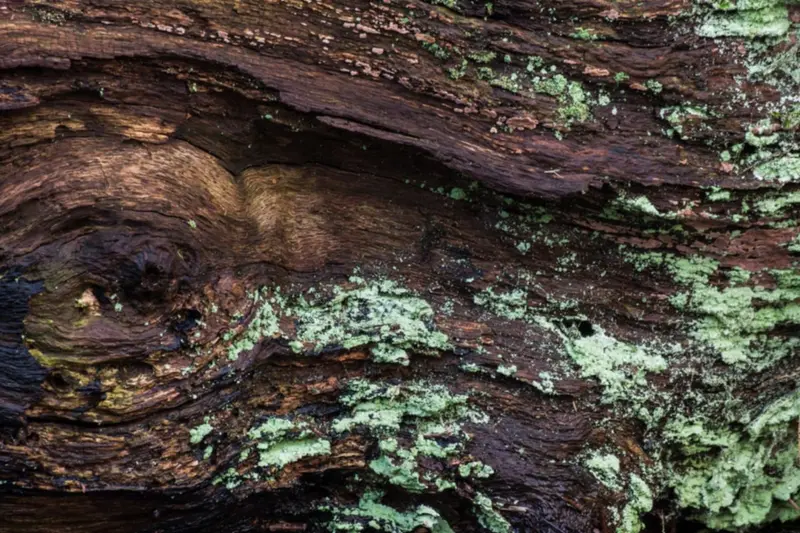
Wood rot is caused by decay fungi, which digest the cellulose and lignin that give wood its strength. Unlike surface mold, which mostly stains, decay fungi work inside the wood and leave it soft, crumbly or cracked into small cubes. They need three things: wood, mild temperatures and a lot of moisture for a long time. Decay generally gets started once wood moisture content climbs above roughly 28 to 30 percent, and it can continue at somewhat lower levels once established.
A crawl space with high humidity rarely gets the framing that wet by itself. Rot almost always points to liquid water: a leak, splash-back, condensation dripping from a duct, or a spot where rainwater reaches the wood repeatedly.
Where to look
Rot concentrates in predictable places:
- The sill plate and rim joist, especially along the side of the house where gutters overflow, under exterior doors and below windows that leak.
- Where a deck attaches. A deck ledger fastened to the rim without proper flashing channels water straight into the framing.
- Under bathrooms and kitchens, where years of small leaks at a toilet, tub or dishwasher soak the subfloor and joists.
- Joist ends sitting on damp masonry, and girders resting on piers that wick water.
- Directly under sweating ducts and condensate lines.
Rot, mold and termites
These three are often found together but are different problems. Mold grows on the surface and stains wood without weakening it much. Rot destroys the wood from within. Termites eat it from inside as well, and in North Carolina the eastern subterranean termite is common enough that every crawl space should be checked for its mud tubes, the pencil-width tunnels it builds up piers and foundation walls. Termite damage often looks like rot at first glance but has layered galleries packed with soil. Active termites are treated by a licensed pest control company; damaged framing is then repaired like rot.
Brown rot and white rot
The decay found in crawl space framing is usually one of two types. Brown rot, the most common in softwood framing lumber, leaves wood darker, shrunken and cracked into small cubes that crumble when pressed. White rot bleaches wood lighter and leaves it soft, spongy or stringy. Both mean the wood has lost strength. The type matters less than how far it extends, which is found by probing until sound wood is reached.
Testing the wood
Two simple tests tell most of the story. A screwdriver or awl pushed into the wood shows whether it is sound or soft. A moisture meter shows how wet it is: framing in the low to mid teens is healthy, readings near 20 percent support mold, and readings well above that mean the wood is wet enough for decay. A crawl space inspection records both across the framing and photographs any soft areas.
Repairing rotted framing
The repair depends on how far the decay has gone:
- Limited damage in a joist is reinforced by sistering a new joist alongside it.
- Rotted sill plates and rim joists are cut out in sections and replaced while the framing above is temporarily supported.
- Damaged girders are replaced or supplemented with a new beam and support posts.
- Soft subfloor under bathrooms and doors is cut out and replaced, sometimes from above.
These repairs are covered in detail on the floor joist repair page. Larger structural repairs may need a building permit.
Stopping rot from coming back
Replacing rotted wood without stopping the water means replacing it again later. The source gets fixed first: the leak repaired, the deck flashed, the gutters and grading corrected through crawl space waterproofing. Then the space is kept dry with crawl space encapsulation. New framing in a dry crawl space should outlast the house.
Wood rot — common questions
How do I know if crawl space wood is rotted?
Push a screwdriver into it. Sound wood resists; rotted wood is soft, splinters easily or crumbles. Moisture meter readings well above 20 percent point to wood at risk.
Is mold the same as rot?
No. Surface mold stains wood but does not weaken it much. Decay fungi break down the wood itself and need more moisture over a longer time.
Can rotted joists be repaired without replacing them?
Often. Joists with limited damage are sistered with new lumber. Rotted sill plates and badly decayed joists are cut out and replaced.
Is wood rot covered by homeowners insurance?
Usually not when it comes from long-term moisture. Policies typically cover sudden events rather than gradual decay, so check your own policy.
Related crawl space problems
Not sure what is going on down there?
Call and describe what you are noticing, or send the details and we will follow up.